8 hr
Full-Day Puszta Horse Ranch Experience from Budapest
Discover Hungary's Great Plain with a guided city walk, traditional horse show, and authentic ranch lunch
Reserve
Hand-picked by our editors — only the best 5 experiences from 18 reviewed.
Verified partners for every tour, free cancellation where available, and instant confirmation on every booking.
8 hr
Discover Hungary's Great Plain with a guided city walk, traditional horse show, and authentic ranch lunch
Reserve
8 hr
Escape Budapest's bustle for a full-day countryside adventure with equestrian traditions and lunch
Reserve
1 hr 10 min
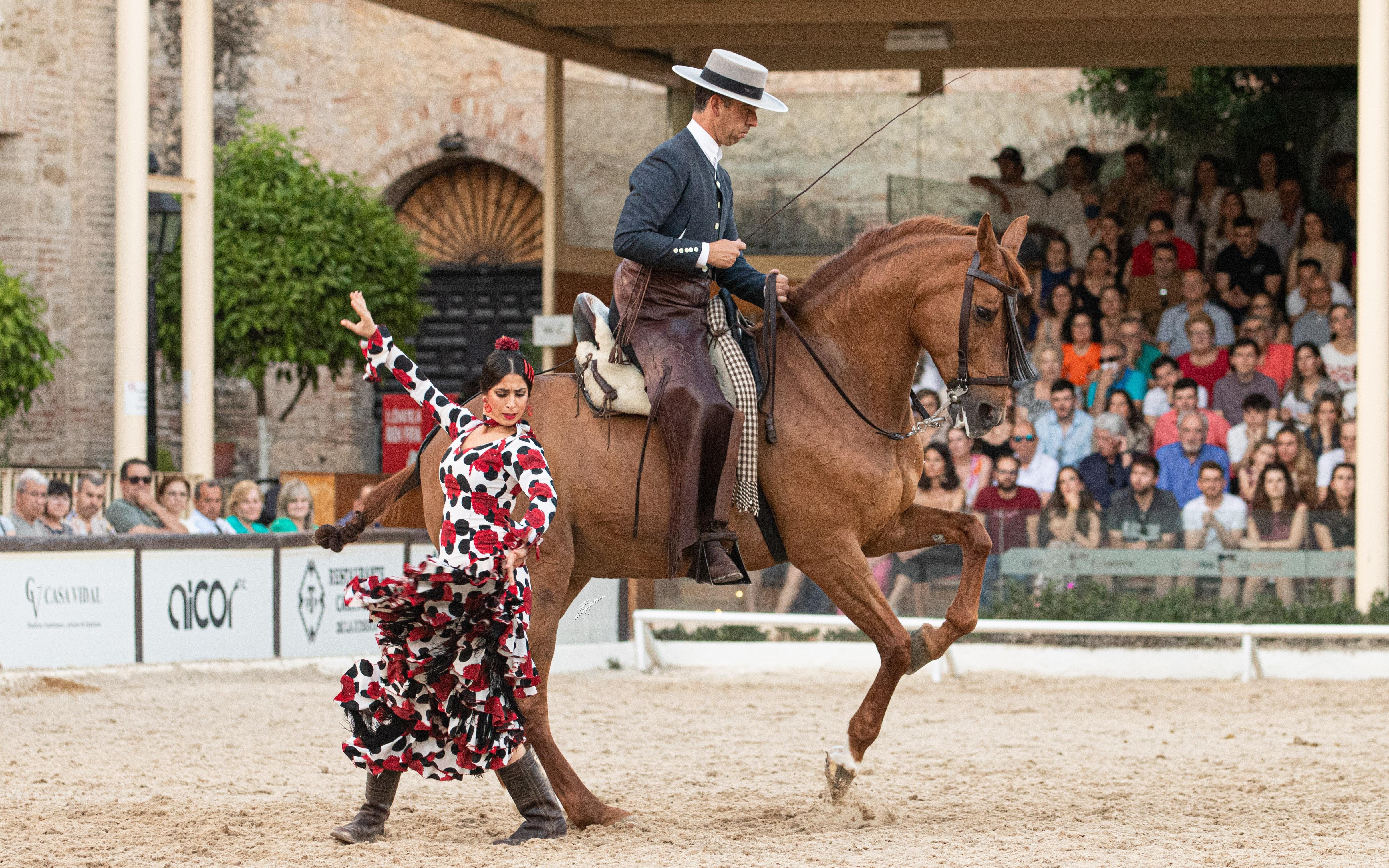
Watch Andalusian horses perform classical and cowboy dressage alongside live flamenco in a 16th-century stable.
ReservePrices from verified partners. Availability updates in real time at checkout. Free cancellation policies apply where shown.
The landmarks, rooms, and views travelers on this tour remember — all visible on a single visit.
Explore the history of Hungarian horse sport and the competitive career of the Lázár brothers.
Observe ancient domestic livestock breeds representative of the Puszta region.
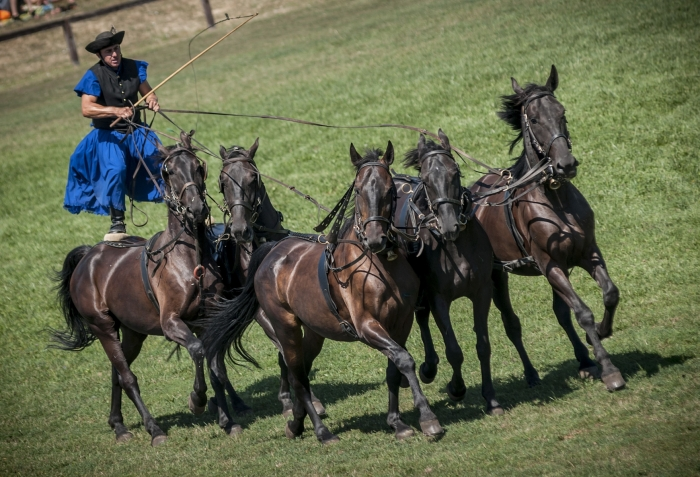
Watch the traditional Puszta-five show where riders handle five horses at once.
Discover the trophy collection and carriages from historical championships.
A dedicated section where younger guests can enjoy short pony rides.
Choosing between these equestrian traditions depends on whether you prefer the raw, expansive freedom of the Hungarian plains or the refined, disciplined precision of the Spanish baroque court. Many travelers acquire puszta horse show tickets tours to witness authentic nomadic heritage rather than the stylized, methodical dressage found in Andalusia.
| Feature | Top pick Puszta Show | Royal Riding School |
|---|---|---|
Cultural Setting |
Hungarian ranch culture | Spanish royal court heritage |
Riding Style |
Nomadic folk riding | Classical baroque dressage |
Show Focus |
Herding skills and acrobatics | Choreographed horse ballet |
Audience Interaction |
Informal and energetic | Formal and observant |
Typical Duration |
1.5–2 hours | 1.5–2 hours |
Primary Location |
Domonyvölgy, Hungary | Jerez de la Frontera, Spain |
| See tickets → |
Verdict: If you seek the untamed spirit of the open steppe, puszta horse show tickets provide a unique look at rural horsemanship, whereas the Royal Riding School offers a more polished, historical equestrian spectacle.
Choose your ticket, select your date, and reserve in under two minutes. Secure checkout handled by our verified partner.
Instant confirmation by email, with a mobile voucher you can save offline. No printing, no queuing at a collection desk.
Arrive at the entrance, show your voucher on your phone, and walk in. Most tickets include priority or skip-the-line access.
Practical details for your visit straight from our verified partners — hours, access, rules, and how to get there.
Casual and comfortable outdoor clothing is recommended for puszta horse show tickets. Sturdy footwear is advisable for walking between the stables and the show arena.
Small personal bags are permitted at the venue. There are no formal security checkpoints for puszta horse show tickets, but staff monitor the grounds.
Photography is permitted throughout the park. Please refrain from using flash during the horse performances as it may startle the animals.
The venue is largely accessible for visitors with mobility aids. Paths around the park are flat and stable, suitable for those with puszta horse show tickets.
The park is highly family-friendly, featuring playgrounds and pony rides. It is a popular destination for families holding puszta horse show tickets.
Traditional Hungarian cuisine is available on-site, with buffet options often included with specific puszta horse show tickets. Drinking water is provided during the experience.
Best time to go, insider tips, nearby landmarks, and the cancellation fine print — flip through to skim what matters to you.
Flexible, no hidden fees.
Prior arrangement is required for all puszta horse show tickets. Cancellations must be managed through your booking provider according to their specific terms.
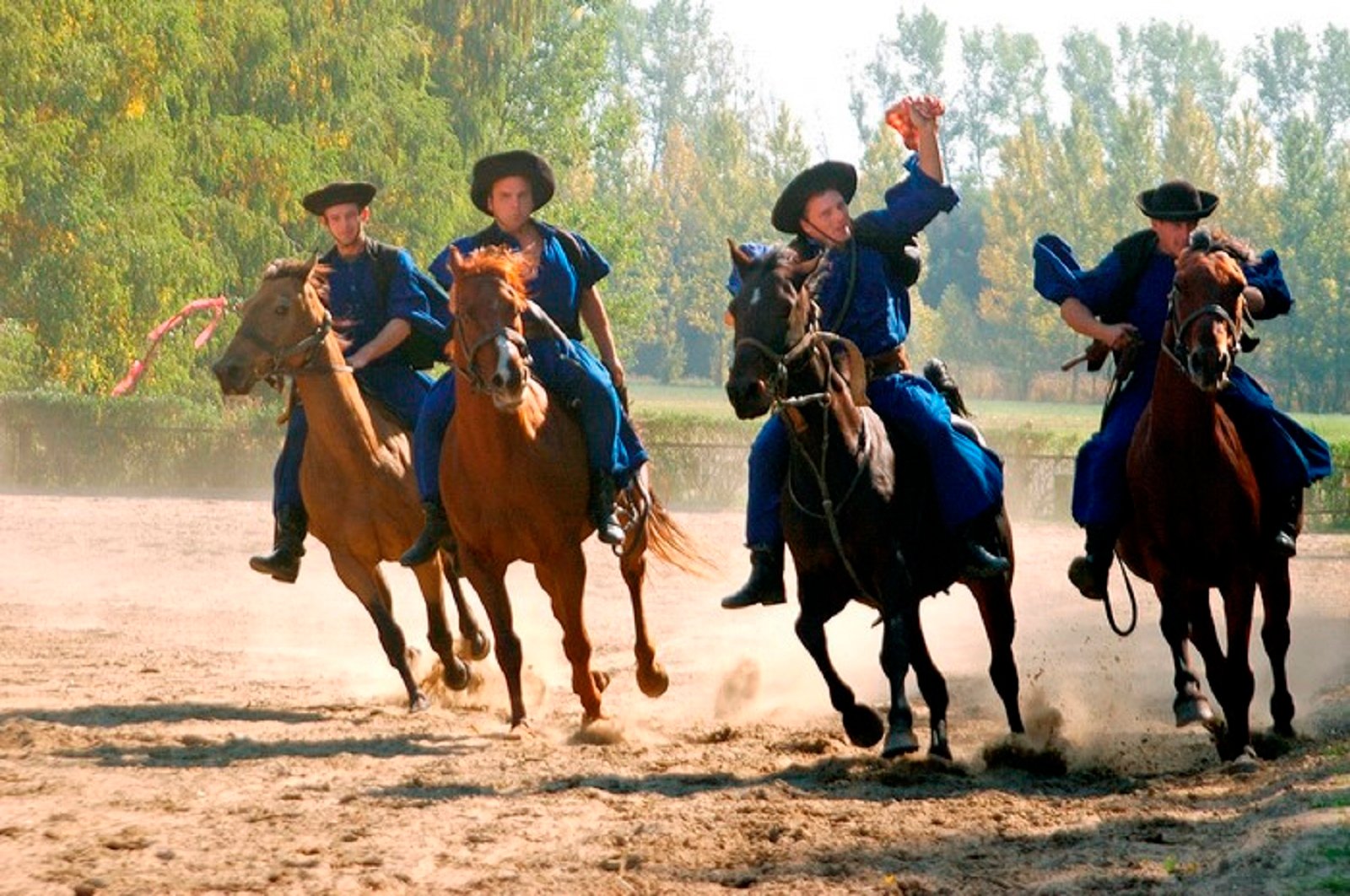
The csikós tradition of standing astride five galloping horses, controlling them with a single rein in each hand, originated not as spectacle but as necessity on the vast Puszta grasslands, where herdsmen needed to move livestock quickly across roadless terrain that stretched unbroken to the horizon. By the eighteenth century, these Hungarian horsemen had refined their riding into a disciplined craft, and by the mid-twentieth century, ranches across the Great Plain began staging formal demonstrations for visitors arriving from Budapest and Vienna. What had been working technique became curated performance, preserving skills that mechanized agriculture was rendering obsolete. Today, puszta horse show tickets grant access to a choreographed celebration of that heritage, performed daily at venues like Lázár Lovaspark in Domonyvölgy, where riders in traditional costume execute mounted archery, whip-cracking displays, and the signature five-in-hand driving that remains the discipline's most technically demanding act. The shows unfold in open-air arenas surrounded by acacia groves, with narration in Hungarian, English, and German explaining each maneuver's historical purpose. The horses themselves—Nonius, Furioso-North Star, and Gidran breeds developed in Hungarian stud farms—carry bloodlines refined over two centuries for stamina and responsiveness on the plains. The hour-long programs integrate folk elements: carriage processions, shepherd dog herding trials, and occasional appearances by racka sheep with their distinctive spiral horns. Unlike the stylized equestrian ballets of Western Europe, the Puszta format emphasizes utility over elegance, with each trick rooted in a real ranching task. The whip-crack, for instance, was the herdsman's long-distance signal across open ground, audible for half a kilometer. Visitors booking puszta horse show tickets tour packages often combine the performance with a traditional gulyás lunch served in a csárda, the rustic inns that once dotted caravan routes across the plain. The equestrian tradition survives in part because Hungary's remaining grasslands—now protected as Hortobágy and Kiskunság national parks—still support limited grazing, and in part because the performances themselves have become economically viable cultural heritage. The csikós riders who perform at Lázár and similar venues train for years, apprenticing under older horsemen who learned the craft before collectivization. The result is not folklore frozen in amber but a living discipline, adapted to the twenty-first century yet still recognizably the work of the Great Plain.

"The csikós whip-crack was the herdsman's long-distance signal across open ground, audible for half a kilometer."
A step-by-step walkthrough of the visit — what you'll see, how long each stage takes, and the details that matter.
You arrive mid-morning at Lázár Lovaspark, passing beneath an arched wooden gate flanked by acacia trees, the scent of hay and dust already carried on the breeze from the paddocks beyond. The arena opens ahead, a circular sand ring bordered by tiered benches, and you settle into a shaded section as riders in embroidered vests and wide-brimmed hats lead their horses into position. The first act is a carriage procession—four grays pulling a painted wooden wagon at a measured trot—followed immediately by a solo rider who stands upright in the saddle, balanced on the horse's back as it canters a full lap. The tempo accelerates. A csikós mounts two horses simultaneously, one foot on each back, then adds a third, a fourth, a fifth, all tethered by thin leather reins he gathers in his fists. The horses move in synchronized rhythm, their hoofbeats a single percussive roll, and he steers them through figure-eights and tight turns without breaking pace. Between acts, a narrator explains the historical context in three languages, but your attention stays on the riders, who dismount and remount at full gallop, leaning low to scoop objects from the sand. The final demonstration is mounted archery: targets set at intervals around the ring, the rider firing backward over his shoulder as his horse circles. The whip-crack finale—a single rider snapping a bullwhip in rhythmic bursts—echoes off the wooden fences, sharp and precise. You leave through the stable yard, where the horses stand cooling in the shade, their coats gleaming.
The park is open daily from 10:00–17:00. These hours apply to all holders of puszta horse show tickets.
Yes, the equestrian show requires prior arrangement. We recommend securing your puszta horse show tickets early to ensure availability.
We suggest arriving between 10:00–12:00. This ensures you avoid mid-day heat and reach the venue before the primary 12:00 showtime.
Absolutely, the park is very family-friendly and children are welcome with their puszta horse show tickets.
Yes, the grounds are designed to be accessible for visitors with limited mobility. The park is welcoming to all with puszta horse show tickets.
Yes, photography is allowed for personal use. Please avoid flash during the performances for the safety of the horses and riders.
Dining options depend on your specific booking package, which is part of the puszta horse show tickets arrangement.
You can take a long-distance bus to the Domonyvölgy stop, followed by an 800-meter walk to the park entrance.
The horse show may be adjusted during inclement weather, but the facilities are well-equipped to host visitors with puszta horse show tickets.